Two programs can now settle a bill with each other in less time than it takes to read this sentence. Neither has any way of knowing whether the other will do the job.
That asymmetry is the subject of two papers I wrote in March 2026. The first audits what an economy of autonomous agents would need before strangers could trade in it at scale, and it finds six primitives: identity, bonding, escrow and the verification of work, settlement, reputation, and the assignment of liability. Each has centuries of human history behind it. Only one was ready. Settlement, the moving of money, worked, and it went on working faster than I expected: by the time I wrote the second paper, sixteen days later, three competing standards for machine payments had entered production within six months of one another, Stripe’s Agentic Commerce Protocol, Coinbase’s x402 and the Machine Payments Protocol from Stripe and Tempo. Those names will date. The asymmetry will not.
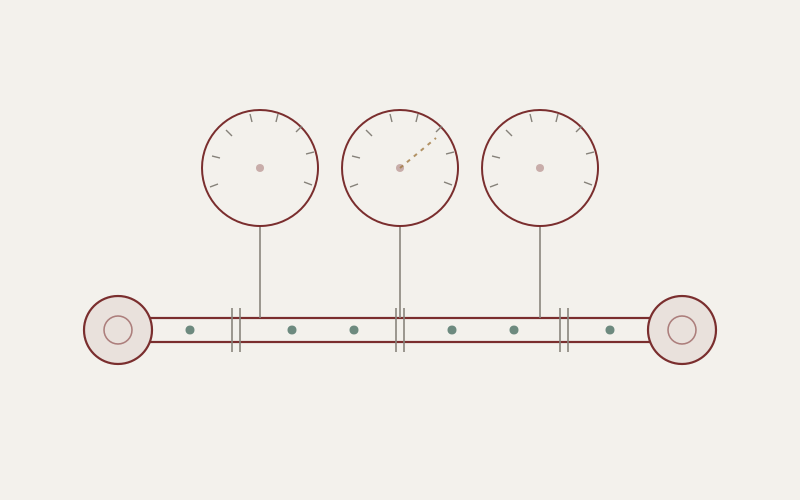
What did not work was everything that lets you deal with someone you have never met. I grouped those primitives under the name trust layer: adjudication, which decides whether a job was done; reputation, which remembers how a counterparty behaved last time; and liability with its companion, insurance, which settle who pays when things go wrong. All three had critical gaps. The pipes are built; the gauges are absent.
- SettlementLow
- BondingMedium
- IdentityMedium-high
- Escrow and verificationHigh
- ReputationHigh
- Liability and insuranceVery high
None of this is new. Every commercial civilisation has had to solve the problem of the stranger, and each of the three gaps has an ancestor that solved it once, for people. Medieval England had a court for it. Nineteenth-century New York had a ledger. London had a coffee house. Their solutions are worth more of our attention than the payment rails, because they show what the machines are missing and why money alone never supplied it.
I · The court of dusty feet
Fairs and markets in medieval England carried their own court, and its name is a piece of etymology with a business model inside. The court of piepowder comes from the French pieds poudrés, dusty feet: the travelling merchants and pedlars who arrived for the fair and were gone when it ended. Blackstone called it “the lowest, and at the same time the most expeditious, court of justice known to the law of England.” Sir Edward Coke, as Blackstone reports him, preferred a different derivation: the court was so called “because justice is there done as speedily as dust can fall from the foot.” Coke’s is the weaker etymology and the better economics.
The court heard only disputes arising in that very fair, and a complaint was to be heard and decided within the day, before the steward of whoever held the market. Nobody could usefully chase a dishonest seller of cloth through the royal courts for a year, because by next week buyer and seller would both be somewhere else. So the quarrel was settled while the dust was still on everyone’s shoes, at a cost in proportion to its size. That proportion was the invention.
The machine economy has no such court. For deliverables a computer can check, it does not need one: code passes its test suite or fails it, a file matches its checksum or does not, and an escrow contract can release payment on the answer. That kind of escrow works today. The work worth paying for, unfortunately, is mostly of the other kind. Whether a research summary is adequate, or whether a codebase meets a specification written in English, takes judgment, and the institutions that sell judgment are priced for people. Commercial arbitration runs over weeks or months, on disputes typically worth fifty thousand dollars or more. An agent that buys a three-cent service and receives rubbish has no court of dusty feet. It has only the option of not buying again, which presupposes that it can remember.
The second paper proposes a mechanism for this gap, a Quality Adjudication Market. Traders bet on whether a deliverable meets its specification, and a random sample of those markets is settled by human audit, so that a little human judgment disciplines a great many prices. Think of it as piepowder with a lottery for the steward’s time. It works where the specification can be written down for a machine. Where the value of the work lies precisely in what nobody managed to specify, a market converges on its reading of the resolution rule, which may have little to do with the quality of the work, and the paper says so.
II · A ledger of strangers
Reputation is memory, and one of the first people to make a business of it was a merchant who had been burned. In the Panic of 1837 the New York silk firm of Arthur Tappan, in which his brother Lewis worked, suspended payments. In 1841 Lewis Tappan founded the Mercantile Agency. Its product was information about other people’s businesses: correspondents around the country reported on the local merchants who sought credit from the wholesalers of New York, and the agency sold the reports to the wholesalers. Under later owners it became R. G. Dun & Company, and in 1933 it merged with its rival, the Bradstreet company. Dun & Bradstreet still sells the same thing.
Look at a credit report fresh and it is an odd object: an account of how someone behaved, written by people who never traded with them, sold to people who have not traded with them yet. It works because its subject holds still. A dry-goods merchant in Ohio in 1851 is, for most purposes, the merchant of 1850, with the same name, the same shop and the same habits.
None of that is true of an agent. A model updated last week is not, in any useful sense, the model that earned its record last month, and a fine record in data analysis says little about reliability in writing code. An agent that misbehaves can discard its identifier and come back clean, which the literature calls the cheap-pseudonym problem. And reputation suffers from the oldest bootstrapping problem in commerce: the record requires transactions, the transactions require trust, and the trust was supposed to come from the record. The audit rated the gap high, with infrastructure for recording and querying agent histories close to absent.
III · The coffee house
By 1688 Edward Lloyd kept a coffee house in Tower Street in the City of London; the earliest record of it is a notice in the London Gazette about stolen watches. Ship captains, merchants and people with money to risk drank there, Lloyd supplied them with news of ships and cargoes, and the house became the place to insure a voyage. The vocabulary survives. Whoever was willing to take a share of the risk wrote their name under the description of ship and cargo, which is why we still speak of underwriters.
Insurance of this kind rests on a statistical bet: that the ships do not all sink together. If each of a hundred voyages is lost independently with probability four per cent, an underwriter who takes a small share of each expects about four losses a year and will very rarely see more than ten. The law of large numbers turns a hundred frightening gambles into one dull business. The bet fails when the ships share something, a war, a hurricane season, a flaw in one design of hull. Then the losses arrive together, and the average, which never moved, stops being the number that matters.
Agents built on the same foundation model share a hull. A vulnerability in a widely deployed model, an adversarial prompt that works on all of its instances or a shift in its inputs can make thousands of agents fail in the same week. The audit rated liability and insurance the widest gap of the six, partly because the law has not settled who is liable for what an autonomous program does, and partly because of this. Insurers price from long histories of repeated, independent events. Agent failures offer neither the history nor the independence.
Run the pool yourself. Each of a hundred agents fails in four per cent of years on average. Choose how much they share, then run the years.
Experiment 01 · A hundred agents, one model
Same average. Different years.
Every agent fails in 4% of years on average, at every setting of ρ.
Failures per year, most recent on the right. The dashed line is the long-run average of four.
Year 1 at shared exposure 0.30: 3 of 100 agents failed. Over 1 year the average is 3.0 a year and the worst year took 3.
The calculation and its assumptions
Each agent has a hidden health variable √ρ·Z + √(1 − ρ)·εᵢ, where Z and the εᵢ are independent standard normal draws. Z is shared by all hundred agents and drawn afresh each year; it stands for whatever they have in common through their model. An agent fails when its health falls below Φ⁻¹(0.04), so each agent fails with probability 4% in every year, whatever ρ is. Years are independent of one another. The pool, the failure rate and the correlations are illustrative, not estimates for any actual agents or models. Real failures need not follow a Gaussian factor structure; a single shared factor is the simplest way to share exposure, not the only one.
What the experiment shows is easy to state and hard to absorb. The average does not depend on the correlation at all: run enough years and every setting of the slider gives about four failures a year. What changes is the shape of the bad years. With independent agents, a long run’s worst year takes about a tenth of the pool. With a shared exposure the typical year is quieter than the average, because in most years nothing they share goes wrong, and at ρ = 0.3 the one-in-two-hundred-year loss is about a third of the pool, all at once. An underwriter who has watched twenty quiet years has learned the average and nothing about the tail.
The model behind the experiment is the one banks use for loan portfolios, and the derivation is worth seeing because it explains the result. Give each agent a hidden state of health built from two parts: a factor Z common to every agent on the same model, and a private shock εᵢ, both standard normal. Write the health as √ρ·Z + √(1 − ρ)·εᵢ, so that ρ is the correlation between any two agents’ health. The agent fails when its health falls below the threshold Φ⁻¹(p), where Φ is the normal distribution function, which makes its failure probability exactly p, whatever ρ is.
Now condition on the shared factor. Once Z is known the private shocks are independent, the law of large numbers returns, and in a large pool the fraction of agents that fail is the probability that one of them fails, given Z:
The pool’s loss has become a fixed function of the shared factor. All the diversification the pool can offer has already happened; what remains is the factor itself. The one-in-two-hundred-year loss is therefore L evaluated at the one-in-two-hundred-year value of Z:
Oldrich Vasicek wrote this down at KMV in 1987, and the same expression, evaluated at 99.9 per cent, sits at the heart of the Basel II capital rules for banks; 99.5 per cent, a one-in-two-hundred-year loss, is the standard European insurers are held to. In plain words: a large pool of correlated risks inherits the tail of what its members share, not the tail of the members. For someone who has to quote a premium, the expected loss p sets the price of the average year and ρ sets the capital that keeps the insurer alive in the bad one. Get p right and ρ wrong, and you are cheap in exactly the year you cannot afford to be.
Now be the insurer. Fix the failure rate, then try to set aside capital without knowing the shared exposure.
Experiment 02 · Quote the capital
The premium needs a number nobody sells.
Capital beyond the expected loss, per agent, as a share of what insuring one agent alone would need, for every ρ. The dot marks your choice.
With p = 2.0% and ρ = 0.30, the one-in-two-hundred-year loss is 22.1% of the pool, 11.1 times the expected loss. The correlation between two agents’ failures is only 0.06.
The calculation and its assumptions
The same one-factor model as in the first experiment, for a pool large enough that the private shocks average out: the large-pool limit worked out by Vasicek. Each failure loses the agent’s whole exposure. The one-in-two-hundred-year loss per unit of exposure is L₀.₉₉₅ = Φ((Φ⁻¹(p) + √ρ·Φ⁻¹(0.995))/√(1 − ρ)). Capital is that loss minus the expected loss p, which the premium is assumed to cover, shown as a share of 1 − p, the capital needed for a single agent, whose one-in-two-hundred-year loss is its whole exposure whenever p exceeds 0.5%. The conditional contract is priced at P(both fail)/p, with P(both fail) = ∫ φ(z) L(z)² dz computed numerically. The failure correlation in the conclusion is the correlation of the two failure indicators, (P(both fail) − p²)/(p(1 − p)): the quantity a Correlation Discovery Market is designed to reveal, and much smaller than ρ, the correlation of the hidden health variables. A finite pool adds binomial noise to these figures; the formula has been checked against a simulated pool of 1,000 agents. The parameters are illustrative. Real insurers also price severity, recoveries, expenses and their own uncertainty about the model, none of which appears here.
Two numbers in that experiment deserve a second look. At p = 2% and ρ = 0.3 the one-in-two-hundred-year loss is 22% of the pool, eleven times the expected loss. Yet the correlation between two agents’ failures, the figure you would get by counting how often they fail in the same year, is about 0.06, a number most risk reports would round to zero. A correlation small enough to ignore in a table is large enough to multiply the reserve by eleven. It is the arithmetic of my essay on what an institution knows, seen from the other side of the ledger: there a shared source makes ten agreeing analysts worth fewer than ten independent opinions; here a shared model makes a thousand policies worth fewer than a thousand independent risks.
Finance has paid for this lesson before. Before 2008, the correlation between mortgage defaults in different parts of the United States was estimated from years in which house prices had risen almost everywhere, and those estimates said that regions rarely defaulted together. When prices fell nationally, they defaulted together. The formula took much of the blame afterwards. The input deserved more of it: a correlation estimated from a sample that contained no instance of the event it was meant to price. Machine agents are in a worse position still. There is no sample at all, and the correlation can move faster than any sample could accumulate. A model update or a newly discovered attack can take ρ from near zero to near one in days.
IV · Pipes without gauges
Put the three gaps side by side and they turn out to be one gap. The court lacks a scalable signal of quality. The ledger lacks a current signal of reliability that keeps pace with model versions. The insurer lacks an estimate of ρ. In each case the missing ingredient is a number of a particular kind, produced by people who hold private information and have money riding on being right. That kind of number has a name. It is a price.
Hayek, in 1945, called the price system “a kind of machinery for registering change, or a system of telecommunications which enables individual producers to watch merely the movement of a few pointers, as an engineer might watch the hands of a few dials.” The machine economy has turned his picture inside out. It has the telecommunications, faster and cheaper than anything Hayek imagined, and no dials on the wall.
The second paper proposes to install them with prediction markets, generalised well beyond the event contracts that settle on an election. The generalisation follows Peter Cotton’s microprediction architecture, in which forecasters submit whole probability distributions against live data streams and are scored with proper scoring rules, which make reporting your true belief the best strategy available. Cotton’s design contains the idea I admire most in this literature. A forecaster’s balance grows with accuracy and shrinks with error, and at zero the forecaster is out. That single number is an identity, because it is costly to create; a reputation, because it records cumulative accuracy; and a bond, because it is what you lose by being wrong. Three of the six primitives collapse into one scored object, and participation itself writes the record that the rest of the stack has been waiting for.
For the insurance gap the paper designs a Correlation Discovery Market. Its simplest contract asks a narrow question: if agent A, built on a given model family, fails a given kind of task in some window, does agent B, built on the same family, fail it too? The price of that conditional contract, multiplied by the probability that A fails (which a companion market prices), gives the probability that both fail, and from there the correlation an insurer needs. In the second experiment it is the number on the right. The deeper advantage is whom the market pays. A security researcher who finds a prompt injection that works on every instance of a model can profit by trading on it, and in trading tells every insurer at once. An actuary estimating from history hears about the vulnerability when the claims arrive.
V · The steward’s chair
Every market has a moment when somebody decides what happened. A contract on whether agent B failed must be settled by someone, or something, applying a definition of failure to the facts. That resolution step is an institution in its own right, with its own incentives and its own ways of going wrong, and the market cannot supply it. The paper puts it plainly: prediction markets relocate trust rather than eliminate it. Juvenal asked who will guard the guards. The machine economy will have to ask who resolves the resolvers, and no price answers that.
Economists are fond of an example that seems to point the other way. The fairs of Champagne in the twelfth and thirteenth centuries drew merchants from Italy, Flanders and far beyond, and in an influential paper of 1990 Paul Milgrom, Douglass North and Barry Weingast modelled the law merchant of such fairs as a system of private judges who kept track of past behaviour, so that strangers could trust one another without a state. It is a beautiful model. When Jeremy Edwards and Sheilagh Ogilvie went back to the historical record, they found that the fairs had a public court sitting throughout each fair, and that the wardens who decided its cases were princely officials, not private judges. The favourite example of trust without authority turned out to rest on authority.
The second paper draws the same line for machines, and I think it is the right one. Markets are good at the machine economy’s problems of measurement: how often an agent fails, whether a deliverable meets its specification, how strongly failures move together. They are poor at its normative problems. A Correlation Discovery Market can tell an insurer how likely a model family is to fail all at once. It cannot decide whether the operator, the model’s developer or the user pays when it does. That takes legislation, regulatory doctrine or judicial precedent, which is to say deliberate social choice rather than price discovery.
The answer to the question in the title is therefore plural. A court cheap enough for the size of the dispute. A memory that knows which version of the agent it is remembering. An underwriter who can see the hull the ships share. The second paper argues that one mechanism, a market that pays for being right, can feed all three with the numbers they lack, and that trading in those markets generates the records the stack needs, which partly dissolves its cold-start problem. I believe that. I also believe the last word belongs to the steward at the court of dusty feet, deciding the case before the fair moves on, with the authority to make the decision stick. Prices can tell us how far to trust a machine. Someone still has to answer for it.